CarInsurance.com Insights
- After a car accident, make sure you document the damage and any injuries with photos.
- Exchange information with the other driver but don’t admit fault.
- One at-fault property damage accident over $2,000 can increase your annual car insurance rates by more than $1,000.
If you’ve just been involved in a car accident, what you do in the next few minutes and hours matters. Here’s the exact order of steps to protect your safety, your claim, and your rights.
First, move your vehicle out of traffic if you can, then determine if anyone is injured, and call 911 if anyone needs medical attention. Exchange information with the other driver, document the scene with photos, and notify your car insurance company to start the claim process. Make sure to keep records of your expenses and follow up on any medical care you receive.
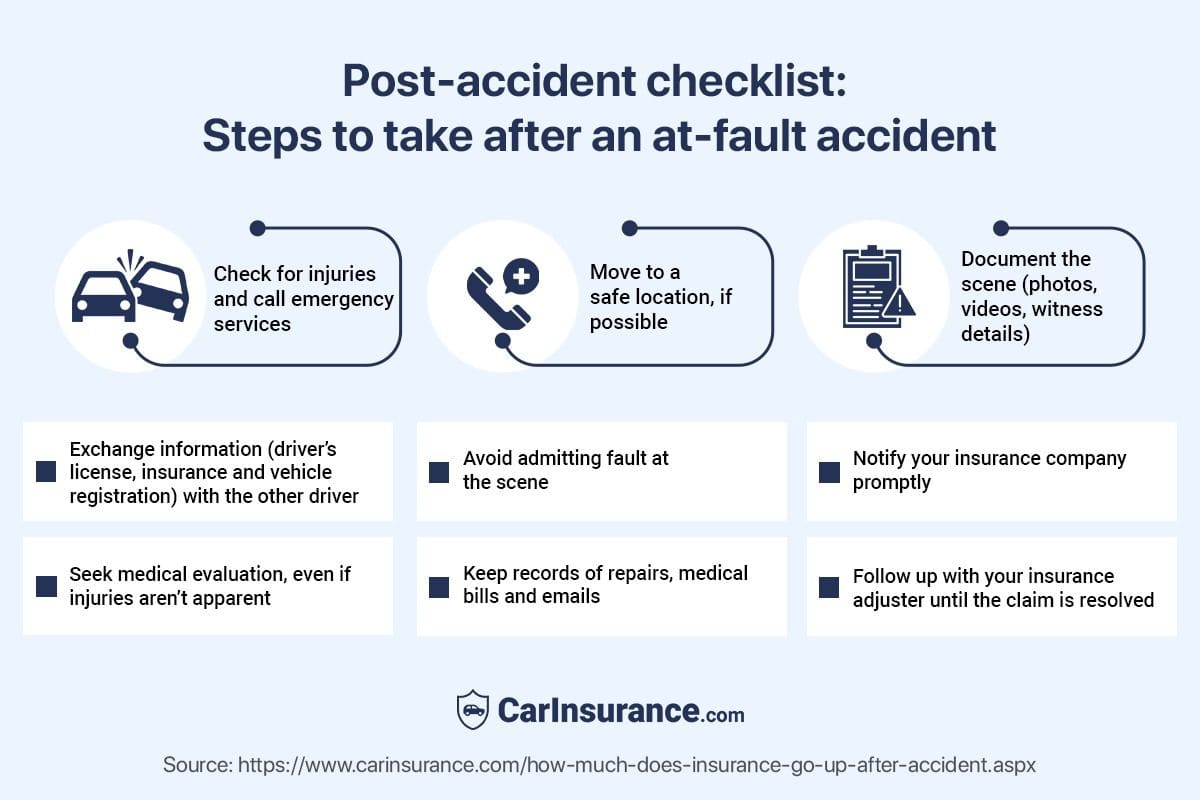

What should I do after an accident? (8-step checklist)
Here’s what you need to do after a car crash.
1. Move your vehicle out of traffic
If you’re in an accident, move your car to the side of the road so you don’t block or endanger others. If you drive off from the scene, it will be considered a hit-and-run, a severe infraction in most states.
2. Check for injuries
Immediately after a crash, check yourself and everyone else involved for injuries, and call 911 if anyone is hurt. Some states require that you provide help if anyone is injured, but don’t do anything that could cause further injuries. It’s not advisable to move injured people unless leaving them where they are would be riskier.
“If you are hurt, you should follow up with a medical professional or get emergency care right away,” said Jason Turchin, Esq., a personal injury attorney at the Law Offices of Jason Turchin in Weston, Florida. “Delays in medical care could hurt your case. Insurance companies may argue that your delay in treatment caused you further harm that may have been mitigated by prompt treatment.”
3. Call the police for a report
Insurers like to have a police report if possible, and it’s required in many states. If you have a minor parking lot accident, the police may not have time to come to the scene, but you can tell your insurer that you did make the call.
If there were any witnesses, get their names and phone numbers. Ask them to stay until law enforcement comes so that their statements can be recorded. Independent witnesses tend to provide an unbiased account of how the accident occurred.
4. Exchange information with the other driver
The basic rule of thumb is to exchange the following information with the other driver:
- Name
- Name of the owner if it’s not the same as the driver
- Contact information, if possible: Phone number and email address
- Names of any passengers
- Vehicle’s make, model and license plate number
- Insurance information: Company name, policy number and phone number
- The responding police officer’s name and badge number
5. Document the accident scene, vehicle damage and injuries
Take photos of the damage to each car, any injuries and the scene of the car crash. Additionally, document the time and date of the accident and include any information about the speed you were driving and the road conditions.
“If there is any visible damage to either vehicle, photograph the property damage. This can help in assessing the causation of your injuries when it comes to settling your claim,” Turchin said.
“Photographs of the accident scene can also help the insurance company and your attorneys determine who is at fault for the crash and get a better sense of how the accident happened,” he said. “Injury photographs can also help document your injuries as they looked at the time of the accident.”
6. Contact your insurance company to file a claim
Contact the appropriate person’s insurance company as soon as possible. If you were responsible, the other driver should contact your insurer. If the other driver was at fault, contact his or her insurer to make your claim.
Even if you don’t think you were at fault, you should still notify your own insurer if your policy requires it, or if you plan to file a claim under your policy.
7. Follow up with medical treatment
If you experience any pain or injuries following the accident, seek prompt treatment.
“Consistent medical treatment can provide evidence that your injuries are related to the accident. Insurance companies may look for reasons to deny your claim or offer you a lower settlement if there are gaps in medical treatment,” Turchin said.
8. Keep track of any expenses related to the car crash
Track any expenses you have to pay due to the car crash.
“Part of claim settlement is to try and make you whole, so you should keep proof of any out-of-pocket expenses such as medical bills, prescription co-payments, vehicle repairs or rental cars,” Turchin said. “Keep track of any expenses you incur because of the accident so you can seek reimbursement from either the at-fault driver’s insurance company or your own insurer.”
Who determines fault in the accident?
Both law enforcement and insurance companies determine who is at fault, or if both drivers are partially at fault.
The police determine fault for traffic violations and issue tickets and penalties to the drivers accordingly. A claims adjuster will be appointed for the insurance companies involved and decide who’s at fault in the crash.
It may be that one driver is found entirely at fault and thus liable for all damages, or both drivers may be found partially at fault for the incident. If both drivers are found to be responsible, your state’s negligence laws determine the payout. Some states use a tort-based system, in which the percentage of fault affects what each person collects. In no-fault states, drivers rely on their own personal injury protection (PIP) to cover their losses, regardless of fault.
No-fault insurance applies only to bodily injuries. Your PIP pays for your own medical bills, but if the other driver were at fault, their liability coverage would pay for damage to your car.
Will an accident affect my car insurance rates?
Yes, an accident will probably impact your car insurance premium, but how much depends on a few factors, including who was at fault, the cost of the claim, and your recent claims history.
If you’re at fault, it’s your first accident with minor damages, which may eliminate your good driver discount. If you weren’t at fault and the claims were made through the other party’s insurance, it likely won’t affect you. However, if you’ve already made a few claims in a short period, any claim may affect your rates.
Some states allow insurers to surcharge drivers only for certain accidents or when damages exceed a specific amount.
An accident typically will affect your rates anywhere from three to five years – it depends upon state laws and the guidelines of your car insurance company.
Speak with a friendly agent and get your quote in minutes!


How much will a car accident increase my car insurance rates?
Several factors can determine how much car insurance premiums increase after an accident. The following table shows average rate increases after a collision, based on CarInsurance.com’s analysis of Quadrant Information Services data.
| Accident/comprehensive claim | Average annual rate | $ Increase after accident | % Increase after accident |
|---|---|---|---|
| 1 at-fault property damage accident over $2K | $2,969 | $1,074 | 57% |
| 1 at-fault property damage accident under $2K | $2,948 | $1,053 | 56% |
| 1 comprehensive claim for over $2K | $2,241 | $346 | 18% |
| 1 comprehensive claim for under $2K | $2,227 | $332 | 18% |
| 2 at-fault property damage accident over $2K | $4,232 | $2,337 | 123% |
| 2 comprehensive claims for over $2K | $2,502 | $607 | 32% |
| At-fault bodily injury accident | $3,093 | $1,198 | 63% |
| Single vehicle accident (driver’s car only) | $2,960 | $1,065 | 56% |
Frequently Asked Questions: What to do after an accident
How long does an accident stay on my record?
It varies by state. In some states, accidents don’t even go on your driving record, or only appear if you were deemed at fault and ticketed for a traffic infraction. You’ll have to contact your state’s Department of Motor Vehicles to determine if the accident will go on your record and how long it will stay there.
If I don’t report an accident, does my insurance company know?
If there is no police report, nothing is noted on your driving record, and you paid out of pocket for any damages you caused, it would be unlikely that your insurer would know about a minor accident you were in.
If claims are involved, your car insurance company will know about the accident even if you don’t get a police report or personally notify your insurer. When claims are paid out, auto insurance providers record the claims information in a central database.
Should I admit fault at the scene of an accident?
No. Even if you think you were responsible for the accident, never admit fault right away. The police report and your insurance company’s claims adjuster will ultimately determine who caused the crash. Admitting fault at the scene can affect your claim before the accident is even investigated.
Do I need to call the police for a minor accident?
Many states require you to call the police for any accident, and insurance providers generally prefer having a police report on file. For a very minor accident in a parking lot, the police might not actually come to the scene, but you can still tell your insurance company that the police were called. Make sure to get the names and numbers of anyone who witnessed the accident, no matter how small.
How much will my insurance go up after an at-fault accident?
The rate increase after an at-fault accident depends on the type of claim and your insurance company’s underwriting policies. On average, a single at-fault accident with over $2,000 in property damage will raise your annual premium by 57%, or roughly $1,074, based on CarInsurance.com’s analysis. Smaller claims and comprehensive-only claims usually have a smaller impact on premiums.
Final thoughts on what to do after a car accident
Never take the blame at the scene of an accident, even if you think you may have been at fault. Documenting the accident scene thoroughly and staying in contact with your insurer can help expedite the claims process. And if your premium increases after the accident, shop around and compare quotes. A different insurer might be able to offer you a lower rate despite your driving record.
Resources & Methodology
Methodology
CarInsurance.com editors collected rates from Quadrant Information Services for a 40-year-old male and female driver carrying a full-coverage insurance policy with limits of 100/300/100 and $500 comprehensive and collision deductibles. Read the detailed methodology for more information.

 Still have a question? Ask our experts
Get advice from an experienced insurance professional. Our experts will help you navigate your insurance questions with clarity and confidence.
Browse all FAQs