CarInsurance.com Insights
- Grace periods are not guaranteed — they vary by insurer and state.
- You may not have coverage during the grace period unless the insurer confirms it.
- Driving after expiration can lead to penalties, including fines or license suspension.
- A lapse in coverage can raise future premiums significantly.
- Immediate action can sometimes reinstate coverage without long-term impact.

Is there a grace period for expired car insurance?
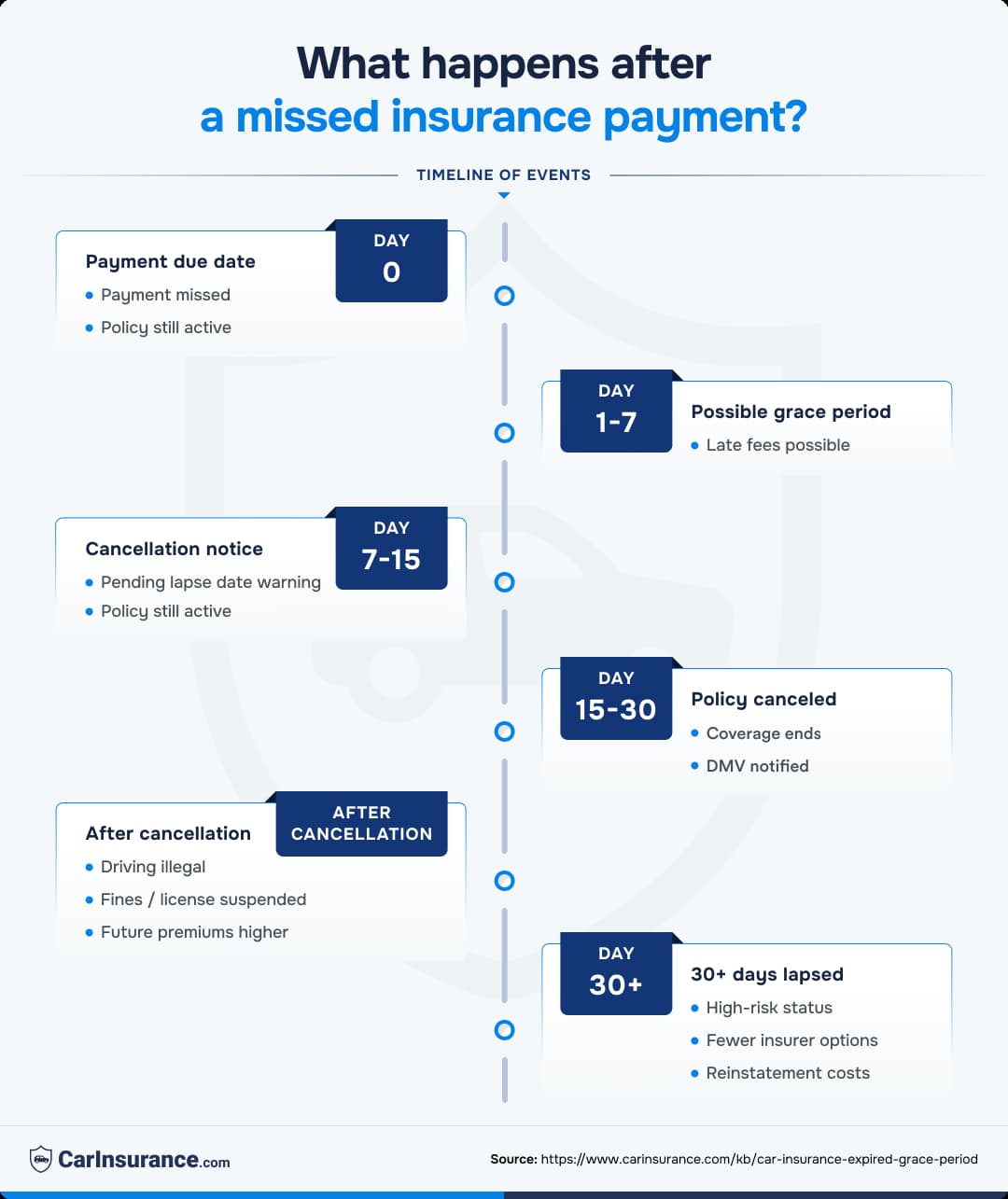
Some insurers offer a short grace period — typically 7 to 30 days — if you miss a payment or your policy expires. However:
- Grace periods are not required in every state.
- Terms differ by insurer.
- Coverage during the grace period may be suspended until payment is received.
What happens if your car insurance expires?
If your policy lapses:
1. You may have no legal coverage
Most states require continuous liability insurance. Driving uninsured can result in:
- Fines
- Registration suspension
- License suspension
- SR-22 filing requirements
2. You risk financial liability
If you cause an accident without coverage, you are personally responsible for:
- Property damage
- Medical bills
- Legal costs
3. Your future premiums may increase
Insurers view coverage lapses as higher risk. Even a short lapse can raise rates.
 Sophie’s wise words
Never assume you’re covered. Always confirm directly with your insurer. A grace period may exist, but it does not guarantee active coverage.
What is a coverage lapse?
A coverage lapse occurs when your policy ends and no replacement policy is active.
Common causes:
- Missed payments
- Non-renewal
- Policy cancellation
- Switching insurers without overlapping dates
Even one day without coverage can count as a lapse in many underwriting systems.
Speak with a friendly agent and get your quote in minutes!


Does insurance cover an accident during the grace period?
It depends.
Some insurers:
- Continue coverage during the grace period
- Reinstate coverage retroactively after payment
Others:
- Suspend coverage until payment is made
- Deny claims if payment wasn’t received before the accident
Always confirm:
- Whether coverage remains active
- Whether reinstatement is retroactive
Do not assume protection.
How to reinstate an expired car insurance policy
If your policy expired:
- Call your insurer immediately.
- Ask whether reinstatement is possible.
- Pay any overdue premiums.
- Request written confirmation of coverage status.
If reinstatement is not possible:
- Purchase a new policy immediately.
- Avoid driving until coverage is active.
- Expect potentially higher rates.
How long can you go without car insurance?
Legally, in most states: Zero days. Penalties escalate the longer the lapse continues.
If your insurer reports a lapse to the DMV, you may need to:
- Pay reinstatement fees
- Provide proof of insurance
- File SR-22 documentation (high-risk status)
How to avoid a car insurance lapse
Prevent future issues by:
- Enrolling in autopay
- Setting calendar reminders
- Confirming renewal dates annually
- Keeping updated contact and billing information
- Comparing quotes before renewal, but ensuring no coverage gap
When switching insurers, overlap policies by at least one day to avoid accidental lapses.
Is a short coverage lapse a big deal?
Even a short lapse can:
- Increase premiums
- Affect eligibility for preferred rates
- Trigger state penalties
- Require proof of financial responsibility filings
The financial impact often exceeds the cost of the missed premium.
Frequently Asked Questions: Car insurance grace period
How long is the grace period for car insurance?
It varies by insurer and state, typically between 7 and 30 days — but coverage may not remain active during that time.
Am I covered if I get into an accident during the grace period?
Not necessarily. Some insurers suspend coverage until payment is received. Always confirm directly.
Will a one-day lapse affect my rates?
It can. Many insurers factor any lapse into risk calculations.
Can I reinstate my policy after it expires?
Sometimes, if you act quickly. Call your insurer immediately to ask about reinstatement options.
What happens if I drive without insurance?
You may face fines, license suspension, vehicle impoundment, and higher future premiums.

 Still have a question? Ask our experts
Get advice from an experienced insurance professional. Our experts will help you navigate your insurance questions with clarity and confidence.
Browse all FAQs