CarInsurance.com Insights
- “Full coverage” isn’t an official policy type — it’s shorthand for a bundle of three coverages: liability, collision, and comprehensive. Together, they protect you, your car, and other drivers.
- Liability coverage is required in nearly every state, but it only pays for damage you cause to others. It won’t cover repairs to your own vehicle.
- Collision coverage pays for damage to your car after a crash, regardless of fault. Comprehensive covers non-collision incidents — theft, hail, flooding, fire, and animal strikes.
- If you financed or leased your car, your lender almost certainly requires you to carry both collision and comprehensive. Dropping them isn’t an option until the loan is paid off.
- Rates vary significantly by insurer after violations. After a reckless driving conviction, for example, Farmers averages $5,219 annually versus Progressive at $2,982 — a gap of $2,237 for the same coverage.
Determining the best type of car insurance for your needs is an important aspect of picking your policy. While drivers must carry at least the state minimum amount of car insurance while behind the wheel, other types of insurance provide more coverage protections.
If you’ve only purchased the minimum coverage, damages to you and your vehicle will not be covered should you be in an accident. That’s because most states only require bodily injury liability and property damage liability in minimal amounts. If your car is damaged or totaled, liability insurance doesn’t help you with your loss.
That’s when full coverage car insurance comes in. As the term implies, full coverage car insurance includes protection for your property in accident. Learn more about full coverage car insurance, what it includes, who it’s best for and whether you need full coverage car insurance.

What does full coverage car insurance consist of?
Full coverage car insurance comprises liability, comprehensive and collision insurance and may incorporate other different types of coverage.
Full coverage car insurance explained: What's covered and what's not?
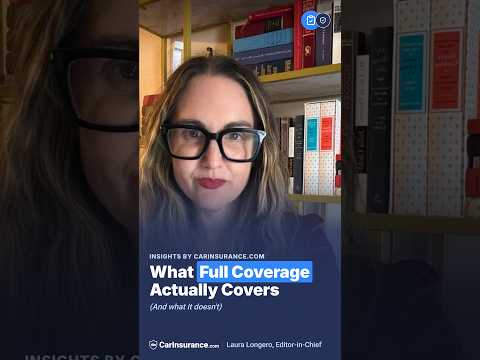
Full coverage car insurance provides protection beyond basic liability insurance, but does it cover every type of damage or accident? In this video, Laura Longero, editor-in-chief at CarInsurance.com, explains what full coverage car insurance typically includes, how liability, collision and comprehensive coverage work together, and which situations may not be covered. From accidents and theft to weather-related damage and common policy exclusions, learn what your insurance covers.

Liability coverage
Drivers must carry liability insurance at minimum amounts that are required by their state. The only state that doesn’t require liability car insurance is New Hampshire. This type of coverage only protects the other driver or property in an accident. It consists of bodily injury liability, which covers other people’s medical costs for injuries and death. Property damage liability pays for damages you cause to someone else’s property. You can set your limits to be the minimum your state requires or higher.
Uninsured and underinsured motorist coverage
It’s easy to presume everyone on the road has some form of insurance. However, that’s not the case — about one in eight drivers aren’t insured, according to the Insurance Research Council (IRC). In fact, some states require you to have uninsured or underinsured motorist insurance.
Even if they don’t, it’s good to have. This type of coverage provides protection when you’re in an accident and the at-fault driver doesn’t have insurance. Your uninsured or underinsured coverage will then pay for your expenses.
Personal injury protection (PIP)
An accident can cause significant damage, including medical needs. That’s why it’s important to consider adding extra medical protections to your policy. PIP or no-fault insurance pays for medical expenses (and often lost wages), regardless of who’s at fault. As with liability and uninsured/underinsured coverage, some states may require PIP. Full coverage auto insurance may include PIP to protect you if you’re injured or are at fault.
Collision coverage
Often when you think of an accident, a collision is what you’re envisioning. In a full coverage policy, collision coverage protects regardless of fault, not just at-fault crashes. Collision insurance pays for damages or losses to your car caused by a collision or crash. This could include events such as crashing into a fence or hitting a parked car.
Comprehensive coverage
Of course, there are other incidents that could occur to your vehicle outside of driving it. Comprehensive insurance covers other damage to your vehicle not caused by a collision. Comprehensive coverage will pay for repairs or reimburse you for a total loss of your vehicle in case of theft, fire, vandalism, hail, flooding, animal strikes or glass breakage.
Does my full coverage auto insurance cover a rental car?
Not all insurance policies provide enough coverage for incidents involving a rental car. If you have the minimum car insurance for your state, car insurance will only cover the damages and injuries of third parties. This could be an issue if there was damage to the rental car. Fortunately, full coverage auto insurance will cover a rental car, so you can skip the expensive supplemental rental car insurance.
As mentioned, full coverage car insurance will protect you in case of an accident in a rental car. But there’s an important caveat — you’ll need to meet your deductible first. For example, if you have a high car insurance deductible of $1,000, a rental car crash will cost you $1,000.
Does full coverage insurance cover your transmission?
Car insurance coverages typically relate to incidents that occur while on the road or those out of your control, such as natural disasters, theft or vandalism. This is why full coverage car insurance only covers your vehicle’s mechanical issues if they occurred during an accident. If your transmission gives out from wear and tear or lack of maintenance, your insurance won’t pay for the repair.
Speak with a friendly agent and get your quote in minutes!


Least expensive full coverage car insurance for high-risk drivers
It’s no secret that full coverage auto insurance is more expensive. With all its extra coverages — to your vehicle and others — you can anticipate paying more than what you would for just liability coverage. If you add a previous accident or a couple of speeding tickets to your driving record, the cost of full coverage may be unaffordable.
You can lower the cost of your car insurance by dropping some of the coverages or inquiring about available discounts. However, if you financed your car, you’ll have to carry full coverage car insurance, including comprehensive and collision coverage. You’ll need to find cheap full coverage car insurance for high-risk drivers. Consider the following ways to save on a high-risk-driver car insurance policy:
Shop around
One of the best ways to find affordable car insurance is to shop around. Compare quotes from several car insurers to find cheap full coverage car insurance for high-risk drivers. Use our tool to get cheap car insurance quotes near you.
Additionally, here’s how major carriers rank for cheap full-coverage car insurance for high-risk drivers with accidents or moving violations on their records. You’ll see rates vary significantly among companies. That’s why it’s wise to comparison shop — you can still save money even if you have recent violations or accidents.
Average rates by companies for two property damage accidents
| Company | Average rates | Rates after two property damage accidents over $2,000 |
|---|---|---|
| Allstate | $2,509 | $5,585 |
| Farmers | $2,387 | $5,943 |
| GEICO | $1,763 | $4,726 |
| Nationwide | $1,548 | $3,567 |
| Progressive | $1,998 | $4,292 |
| State Farm | $1,984 | $2,803 |
| Travelers | $1,606 | $3,209 |
| USAA* | $1,381 | $3,370 |
*USAA offers its services only to military members, veterans and their families.
Average rates by companies for a speeding ticket
| Company | Average rates | Rates after a speeding ticket | $ difference | % increase |
|---|---|---|---|---|
| Allstate | $2,509 | $3,122 | $613 | 24% |
| Farmers | $2,387 | $3,430 | $1,044 | 44% |
| GEICO | $1,763 | $2,899 | $1,136 | 64% |
| Nationwide | $1,548 | $2,352 | $804 | 52% |
| Progressive | $1,998 | $2,656 | $658 | 33% |
| State Farm | $1,984 | $2,357 | $373 | 19% |
| Travelers | $1,606 | $2,417 | $811 | 50% |
| USAA* | $1,381 | $1,681 | $300 | 22% |
*USAA offers its services only to military members, veterans and their families.
Average rates by companies for reckless driving violation
| Company group | Average rates | Rates after violation | $ difference | % increase |
|---|---|---|---|---|
| Allstate | $2,509 | $4,627 | $2,118 | 84% |
| Farmers | $2,387 | $5,219 | $2,832 | 119% |
| GEICO | $1,763 | $3,627 | $1,864 | 106% |
| Nationwide | $1,548 | $3,222 | $1,674 | 108% |
| Progressive | $1,998 | $2,982 | $984 | 49% |
| State Farm | $1,984 | $3,041 | $1,058 | 53% |
| Travelers | $1,606 | $2,830 | $1,224 | 76% |
| USAA* | $1,381 | $2,105 | $724 | 52% |
*USAA offers its services only to military members, veterans and their families.
Raise your deductible
While it’s tempting to keep your deductible low, you could save money if you increase your deductible. Increasing your car insurance deductible from $250 to $1,000 can save you as much as 21% on your insurance premiums.
To see how much you can save, compare the savings by state. However, keep in mind if you’re in an accident, you will have to pay the deductible out-of-pocket. So, make sure you can pay the higher deductible if you’re in an accident.
Take a defensive driving course
Since car insurance companies often set their premiums based on driver risk, you can save money as you improve your driving risk status. Most insurance companies will discount your car insurance for up to three years if you pass a driving safety course — but this isn’t available in every state. There are approved courses you can complete in a few hours online. This investment can pay off in car insurance savings over a few years, and it’s not an expensive or time-intensive endeavor. Many insurers will extend a discount of up to 15% for earning a safe driver certification.
Downgrade your car
What you drive has as much impact on your insurance rates as your driving record. This is because some cars are considered higher risk to insure because of cost of parts, high speed options and increased likelihood of theft. Sports cars, high-value vehicles, new models and SUVs are some of the most costly. If you’re considered a high-risk driver because of past driving history, consider downgrading to a less expensive car to insure.
Is it smart to cancel full coverage auto insurance when the car is paid in full?
Once your car is paid in full and no longer financed, you don’t have to keep full coverage. Whether cancelling full coverage auto insurance is a good idea is another question.
It’s good to ask yourself if you should carry full coverage on a used car. Whether it’s relatively new or has a high value, not having full coverage auto insurance means you’ll be responsible for repairs out-of-pocket. At worst, if your vehicle is totaled, you’ll be without a car. Think twice before you cancel full coverage on your vehicle.
Can you be denied full coverage?
Unfortunately, you could be denied full coverage. A couple of reasons you may not be able to add collision and comprehensive insurance include the following:
- Your vehicle is too old
- Your vehicle has existing damage
If you’re denied coverage over your vehicle’s age, look for another insurer. If your insurance company denies you full coverage because of damage, you could negotiate to have the car repaired to qualify for a full coverage insurance policy.
Resources & Methodology
Methodology
CarInsurance.com commissioned Quadrant Information Services to get car insurance rates for high-risk drivers. The rates are based on sample profiles of 40-year-old male and female drivers with full-coverage policies, limits of 100/300/100, and $500 collision and comprehensive deductibles. Read the detailed methodology for more information.

 Still have a question? Ask our experts
Get advice from an experienced insurance professional. Our experts will help you navigate your insurance questions with clarity and confidence.
Browse all FAQs